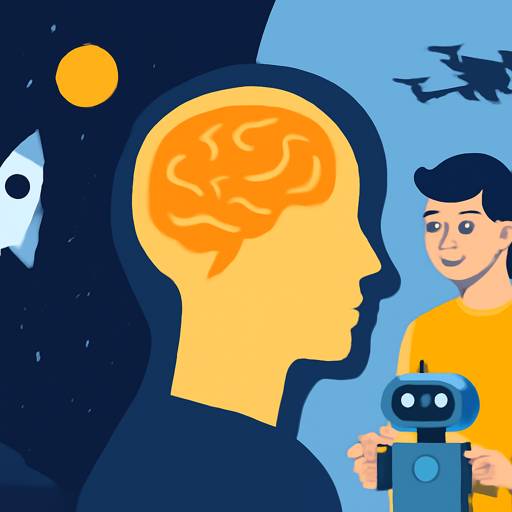
From Stars to Swarms: Inspiring Student Research in Space, Mind, and Robotics
Curiosity powers breakthroughs. When learners get to ask big questions and test their own ideas about the universe, intelligence, and machines, STEM transforms from a subject into a personal journey. Whether the goal is to model exoplanet transits, probe how memory works, or program a team of tiny robots to cooperate, hands-on exploration turns theory into insight. This guide brings together practical pathways that bridge observation and experimentation: astronomy projects rooted in authentic data, cognitive experiments designed for teenagers, and robotics builds that range from lifelike humanoids to coordinated swarms. Each track emphasizes inquiry, iteration, and clear metrics—so students not only make things that move or measure, but also learn to argue from evidence like scientists and engineers. With the right scaffolding, even modest tools can power ambitious questions and original results.
Observing the Universe: Student Astronomy Research and Space Telescope Data
Nothing sparks wonder like real sky data. For accessible astronomy research ideas, start with projects that require only a DSLR, tripod, and patience. Photometry of bright variable stars teaches calibration, signal-to-noise, and time-series analysis: capture repeated images, plot brightness over time, and compare to catalogued light curves. Submitting measurements to established databases (for example, variable star repositories) lets learners contribute to ongoing studies while practicing uncertainty estimation and data hygiene. Light pollution mapping is another entry point: use standardized sky brightness apps or meters at different locations, map results with basic GIS, and analyze correlations with population density and lighting policies. Students quickly see how local actions affect global observing quality.
As skills grow, small telescopes and simple spectrographs enable deeper investigations. Classify stellar spectra with a low-cost diffraction grating, estimate surface temperatures via absorption line patterns, or measure Doppler shifts for bright binaries. With careful alignment and reference lamps, even a school lab can produce publishable-quality spectra of bright targets. Planet hunting is increasingly feasible too: teams can observe known exoplanet transits of bright host stars to reproduce transit depths and durations, then model orbital geometry. These projects build foundations in photometric calibration, detrending, and fitting, skills vital for more advanced analyses.
The biggest leap comes from public archives. Modern Space Telescope Projects place world-class observations within reach. The Mikulski Archive for Space Telescopes (MAST) hosts Hubble, TESS, and JWST datasets; students can download light curves to search for stellar rotation via starspots, identify eclipsing binaries, or vet transit candidates flagged by citizen-science platforms. Accessing TESS full-frame images empowers custom light curve extraction for nearby stars, teaching aperture photometry, background subtraction, and systematics correction. With Hubble images, learners can measure galaxy morphology indices, fit surface-brightness profiles, or practice color-magnitude diagram analysis for clusters. The key is building a reproducible pipeline: document queries, code each processing step, and define acceptance criteria before results are in. That habit turns a single project into a template for future inquiry.
Case studies show what’s possible: student groups have contributed variable star observations cited in professional analyses, replicated exoplanet parameters with backyard telescopes, and joined citizen-science collaborations classifying features in space telescope images. Success tends to follow a common arc—start with a clearly scoped question, use open data or modest equipment, predefine analysis metrics, and iterate. Along the way, emphasize scientific writing: a short paper with figures, error bars, and a limitations section is as important as the measurements themselves. When the process is transparent, the results travel.
Thinking Machines and Thinking Minds: Cognitive Science and Humanoid Robotics
Understanding intelligent behavior invites two complementary approaches: test humans to reveal how cognition works, and build robots to model those mechanisms in action. For cognitive science for high school, choose classic paradigms that are rigorous yet safe and ethical. The Stroop task (color-word interference), visual search (pop-out vs. conjunction), working memory (digit span, N-back), and attentional blink are all feasible with laptops or even paper-based protocols. Students can pre-register hypotheses—reaction times will increase under interference; accuracy will drop as memory load rises—and calculate effect sizes alongside means. Basic counterbalancing, anonymized data handling, and informed consent practices introduce research ethics without bureaucratic overhead.
Analysis deepens understanding. Teach outlier handling, within-subject vs. between-subject designs, and simple statistical tests. Visualizations matter: cumulative distribution functions of reaction times, confusion matrices for recognition tasks, and learning curves across sessions often reveal patterns that averages hide. Connect findings to models—limited-capacity attention explains Stroop costs; resource theories of working memory account for precision losses at higher loads. Add a metacognition angle by collecting confidence ratings and comparing calibration (how well confidence tracks correctness). Students learn that “thinking about thinking” is measurable.
On the engineering side, humanoid robotics for students turns cognitive concepts into embodied algorithms. Start with an upper-body rig: 6–8 DOF arms, a pan-tilt head, and an IMU. Inverse kinematics teaches linear algebra; trajectory planning introduces jerk-limited motion; and proprioception comes alive through sensor fusion. Vision adds perception: detect AprilTags for localization, estimate human pose for gesture following, and use optical flow for stabilizing head movements. Speech and dialogue modules let the robot act as an experimental confederate in human-robot interaction studies—ideal for testing timing, turn-taking, and social cues derived from cognitive models.
Balanced projects bridge the two domains. For example, design a human reaction-time experiment, then implement an analogous robotic pipeline: camera capture, classification, action selection, and motor execution. Measure end-to-end latency and compare distributions to human data. Or adapt a reinforcement learning policy for biped balance and relate it to human postural control under perturbations. When students quantify perception-action loops in both people and machines, they see intelligence as a systems problem—sensing, memory, control, and feedback working together. A capstone might combine an HRI study with safety-first design: soft end-effectors, torque limits, and clear stop conditions ensure that scientific curiosity never outpaces responsible engineering.
Cooperative Intelligence at Scale: Swarm Robotics Projects and Real-World Patterns
Swarm systems trade individual complexity for collective power. A group of simple robots can coordinate to explore, transport, or map environments more robustly than a single sophisticated machine. For accessible Swarm robotics student projects, begin in simulation. Implement flocking with Reynolds’ rules—separation, alignment, cohesion—and tune gains to prevent oscillations. Extend to obstacle avoidance with potential fields, then add leader–follower variants to test resilience to leader failure. Consensus algorithms (e.g., majority voting on binary states) demonstrate how communication topology influences convergence time and error rates. Students learn to measure swarm-level metrics: coverage, time to consensus, energy per task, and robustness under random dropouts.
Transitioning to hardware brings new challenges and insights. A practical swarm node uses a low-cost microcontroller, differential drive, IMU, and a short-range comms channel (infrared, Bluetooth, or ultra-wideband). Color LEDs or e-paper can display state for debugging. Minimal perception—line sensors for arena boundaries or photodiodes for light gradients—keeps costs low while enabling gradient ascent tasks. Implement decentralized rendezvous, perimeter formation, or foraging with virtual pheromones encoded in light signals or broadcast messages. Fault injection—intentionally disabling a fraction of nodes—teaches resilience testing and inspires redundancy strategies like role reassignment.
Real-world analogs contextualize classroom work. Warehouse fleets coordinate paths to avoid congestion; agricultural swarms perform distributed sensing; aerial teams map disaster zones with overlapping coverage; and underwater micro-vehicles monitor coral health. Academic exemplars have shown that hundreds of small robots can self-assemble into shapes, collectively transport objects, or infer environmental fields via distributed estimation. The common thread is locality: each agent follows simple rules using only neighbor information, yet global order emerges. Encouraging students to document rule sets, communication assumptions, and failure modes turns demos into science.
Getting started is easier with curated curricula and kits that scaffold from simulation to hardware—explore Swarm robotics student projects that emphasize incremental builds, clear performance metrics, and reproducible experiments. A strong project arc might look like this: week 1–2, implement flocking in simulation with parameter sweeps; week 3–4, port core logic to two robots and validate pairwise behaviors; week 5–6, scale to five robots and add consensus; week 7–8, introduce faults and measure robustness; week 9–10, compile a report with code, datasets, and videos. Along the way, highlight connections to other domains: use ideas from cognitive science to design agent heuristics (attention, memory decay), and borrow lessons from astronomy about time-series analysis to evaluate swarm dynamics. By uniting careful measurement with imaginative design, students turn coordinated motion into a platform for discovery.