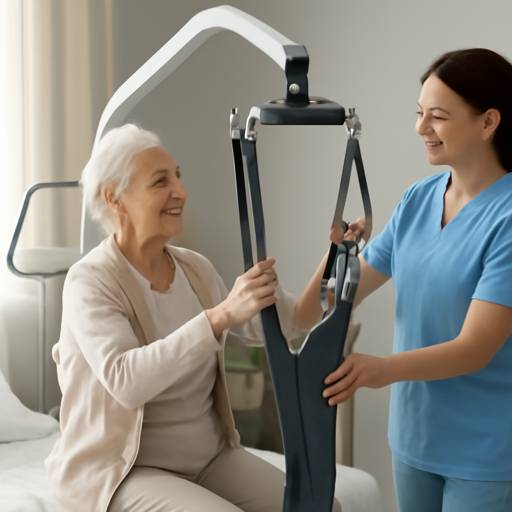
From Bed to Independence: Why a Sit to Stand Lift Transforms Caregiving and Recovery
For caregivers and healthcare facilities, the daily challenge of transferring a patient from a seated position to standing is fraught with risk. Manual lifting strains the lower back, shoulders, and wrists of the caregiver, while the patient may feel unsteady or anxious. This is where the sit to stand lift for sale becomes a game-changer. Unlike a full-body sling lift that hoists a non-weight-bearing patient, a sit-to-stand lift is designed for individuals who have some lower body strength and can bear partial weight through their legs. The device engages the patient in their own mobility, which is crucial for maintaining muscle tone and promoting a sense of autonomy. By providing a stable pivot point and a gentle, controlled ascent, these lifts bridge the gap between complete dependence and independent walking.
The core mechanism is elegant yet robust. The patient sits on a small, padded seat or sling, often with a knee block to prevent sliding, while the lift’s frame provides handles or a chest pad for the patient to grip. As the lift is activated—either manually via a hydraulic pump or electrically with a battery-powered motor—the patient is guided upward into a standing position. This controlled motion reduces the panic and instability that often accompanies a manual transfer. From a financial perspective, investing in a dedicated lifting device reduces workers' compensation claims for back injuries and speeds up patient discharge times, making it a sound asset for hospitals, nursing homes, and even home care budgets.
Understanding the Biomechanics and Medical Necessity Behind Stand-Assist Lifts
To fully appreciate the value of a sit-to-stand lift, one must understand the biomechanics of a safe transfer. During a manual assisted stand, a caregiver typically bears 50 to 70 percent of the patient’s body weight. Over the course of a single shift, a nurse might perform thirty such transfers, accumulating a crushing load on the lumbar spine. This repetitive strain is the primary driver of caregiver burnout and musculoskeletal injury in the healthcare industry. A sit-to-stand lift offloads nearly all of this weight from the caregiver, redirecting the physical demand to a mechanical system. The ergonomic benefit is immediate and measurable: facilities that adopt these lifts see a dramatic drop in lost workdays due to back injuries.
Beyond caregiver safety, the lift serves a critical role in patient rehabilitation. For individuals recovering from hip replacement surgery, knee arthroplasty, or a stroke, the act of standing is a vital milestone. Immobility leads quickly to muscle atrophy, joint contractures, and decreased cardiovascular fitness. The sit-to-stand lift allows a patient to practice the standing motion safely, multiple times a day, without the fear of falling. The knee block provides a tactile cue that helps the patient extend their legs, reinforcing proper movement patterns. This repeated, guided practice can accelerate recovery and improve the patient’s confidence in their own abilities.
It is also important to distinguish this type of lift from other mobility aids. A standard sling lift is used for patients who are completely dependent and cannot assist at all. A walker or cane is used for patients who need minimal support. The sit-to-stand lift occupies the crucial middle ground. It is the tool of choice for the patient who can push through their legs but lacks the balance or endurance to rise independently. This specificity makes the selection of the right device critical. When looking for a reliable medical supply, you must consider the patient’s weight, height, and cognitive ability to follow instructions. A unit with adjustable knee pads, a padded chest support, and a wide wheelbase offers the stability needed for larger patients, while a compact, portable model is better suited for a home bathroom or small bedroom.
Key Features to Evaluate When Shopping for a Lift
The market offers a wide range of sit-to-stand lifts, from basic manual models to fully powered, battery-operated units. The first major decision point is the power source. A manual hydraulic lift uses a pump handle to raise the patient. It is less expensive, lighter, and requires no charging, making it a solid choice for a facility with strong caregivers or for occasional home use. However, it does require physical effort from the caregiver to pump the handle, which can be fatiguing over time. On the other hand, an electric powered lift operates silently at the push of a button. This is the preferred option for long-term care, where multiple transfers happen every hour. The convenience of a battery-powered system reduces any residual lifting strain and allows the caregiver to focus entirely on the patient’s stability and positioning.
Another critical factor is the weight capacity and base design. Most sit-to-stand lifts are rated for patients up to 400 or 500 pounds. However, the stability of the lift is not just about the maximum load; it is about the base spread. Look for a unit with a wide, spreading leg base that wraps around the chair or wheelchair. This feature, often called a "wrap-around" or "open" base, allows the lift to get close to the patient—a crucial requirement for a safe transfer. If the lift cannot slide under the bed or around the wheelchair, the patient will be forced to lean forward unsteadily to reach the seat. Many modern models also feature a "steering" handle that lets the caregiver maneuver the lift through doorways and around furniture without straining their wrists.
Durability and ease of cleaning are non-negotiable in a medical environment. The lift’s frame should be constructed from heavy-duty steel or aluminum with a powder-coated finish that resists scratches and corrosion from disinfectants. The sling or seat material should be easy to wipe down and quick-drying. Some slings are disposable, but reusable, wipe-clean nylon slings are more cost-effective over time. Before making a purchase, assess the availability of replacement parts, especially the sling and battery packs. A lift that cannot be serviced locally will lead to costly downtime. For those actively seeking equipment, browsing a reputable online catalog for a sit to stand lift for sale is a practical first step to compare warranties, weight ratings, and user reviews side-by-side.
Real-World Applications and a Case Study in Efficiency
The theoretical benefits of these lifts translate into tangible improvements in clinical and home settings. Consider a typical skilled nursing facility. Prior to implementing sit-to-stand lifts, a 100-bed unit might have reported an average of fifteen staff injuries per year related to patient handling, costing the facility hundreds of thousands of dollars in insurance premiums and replacement staffing. After a facility-wide transition to using sit-to-stand lifts for all partial-weight-bearing patients, a case study conducted over six months showed a 74 percent reduction in reportable lifting injuries. Furthermore, the average time required for a single transfer dropped from over five minutes (including positioning two staff members) to under two minutes with a single caregiver and the lift. This efficiency gain translated directly into more time for patient care and less time spent on physical logistics.
On the home front, a case study involving a family caring for an elderly parent with Parkinson's disease illustrates the emotional and physical relief provided by this equipment. The patient, a 78-year-old man with progressive rigidity, could stand with assistance but frequently "froze" when attempting to pivot to a wheelchair. His wife, a petite woman in her seventies, was unable to bear his full weight during a fall. After renting a sit-to-stand lift, the dynamic changed completely. The wife could position the lift, encourage her husband to stand, and guide him into his chair without risking either of their safety. The patient reported feeling more in control because he was actively participating in the transfer, rather than being passively lifted. The result was a significant reduction in caregiver stress and a delay in the need for full-time residential nursing care.
Finally, consider the use of these lifts in acute rehabilitation units. Physical therapists often integrate the sit-to-stand lift directly into a patient’s exercise regimen. By adjusting the lift’s angle and the amount of support provided, the therapist can gradually increase the load placed on the patient’s legs. This graduated resistance training is highly effective for rebuilding strength after prolonged bed rest. The lift also serves as a safe "spotter" for balance-challenged patients, allowing them to practice standing and weight-shifting exercises near parallel bars. This clinical versatility makes the lift an essential tool not just for safety, but for active therapy. For any facility or family committed to maximizing mobility while minimizing risk, integrating this device into the daily routine is a step toward smarter, more humane care.